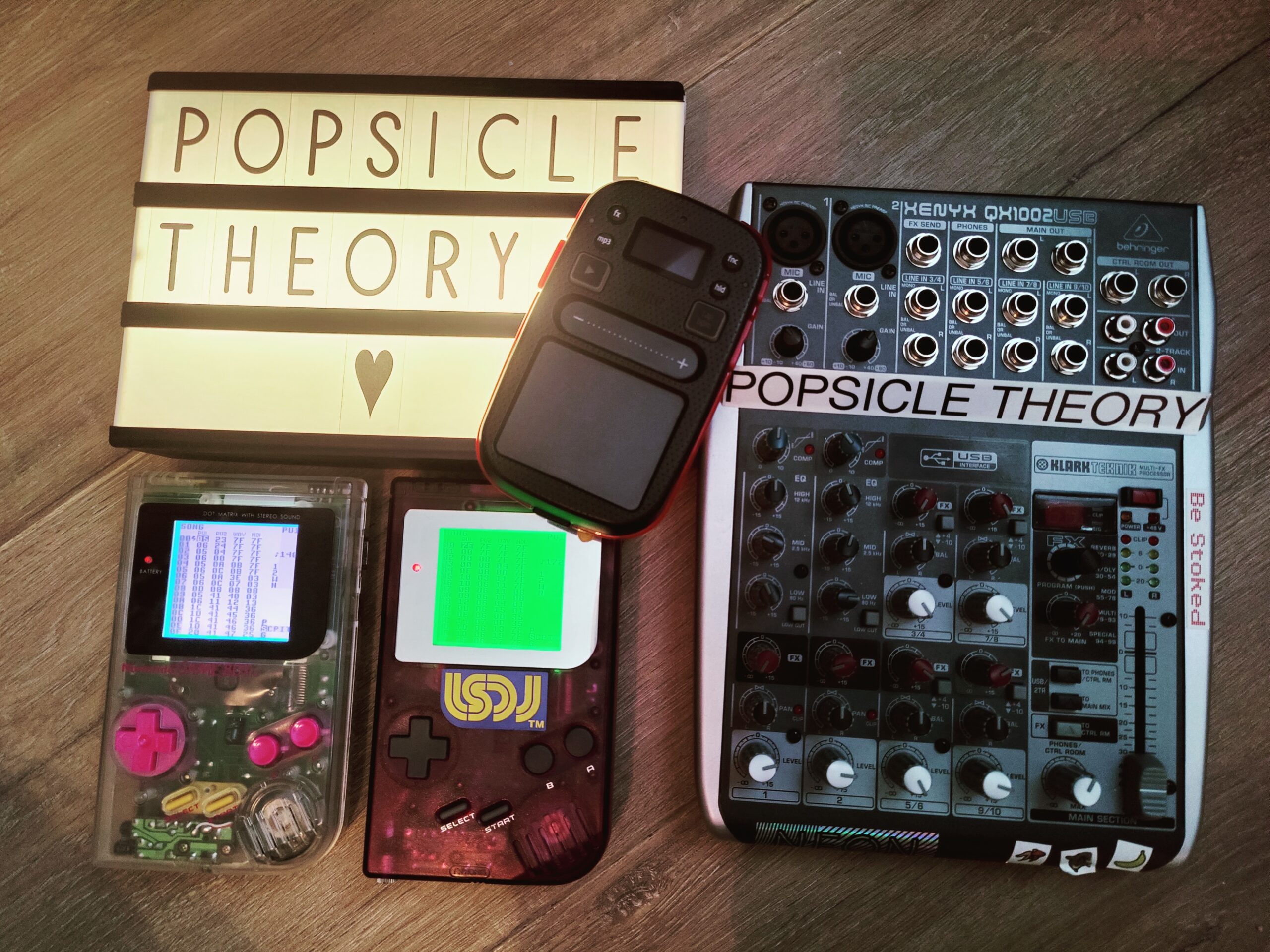
When I tell people I’m a musician, the first question is always: ‘’what instrument do you play?’’
I could give them the answer they want to hear, I play guitar and know my way around a piano.
However, my main instrument is not the instrument you’d immediately think of. It’s a game console that came out the year I was born, 1989.
It’s pretty heavy because of the batteries, but small enough to store two of them in your gig bag. I even have room for my mixer and an effect processor. No roadies needed!
What are the pros of using a Game Boy as an instrument you ask?
- Game Boys are relatively cheap (un-modded ones cost about 40 bucks)
- They do not need tuning.
- You can’t hit the wrong snare or key.
- Instant serotonin boost when you hear the startup sound.
- You can use it on the toilet.
Sometimes I play a set at a retro gaming convention, and I get a lot of confused visitors that think I’m playing Tetris or Mario, so I figured it’s time to explain the HOW. The WHY will follow some other time (I mean, there are easier ways to make music).
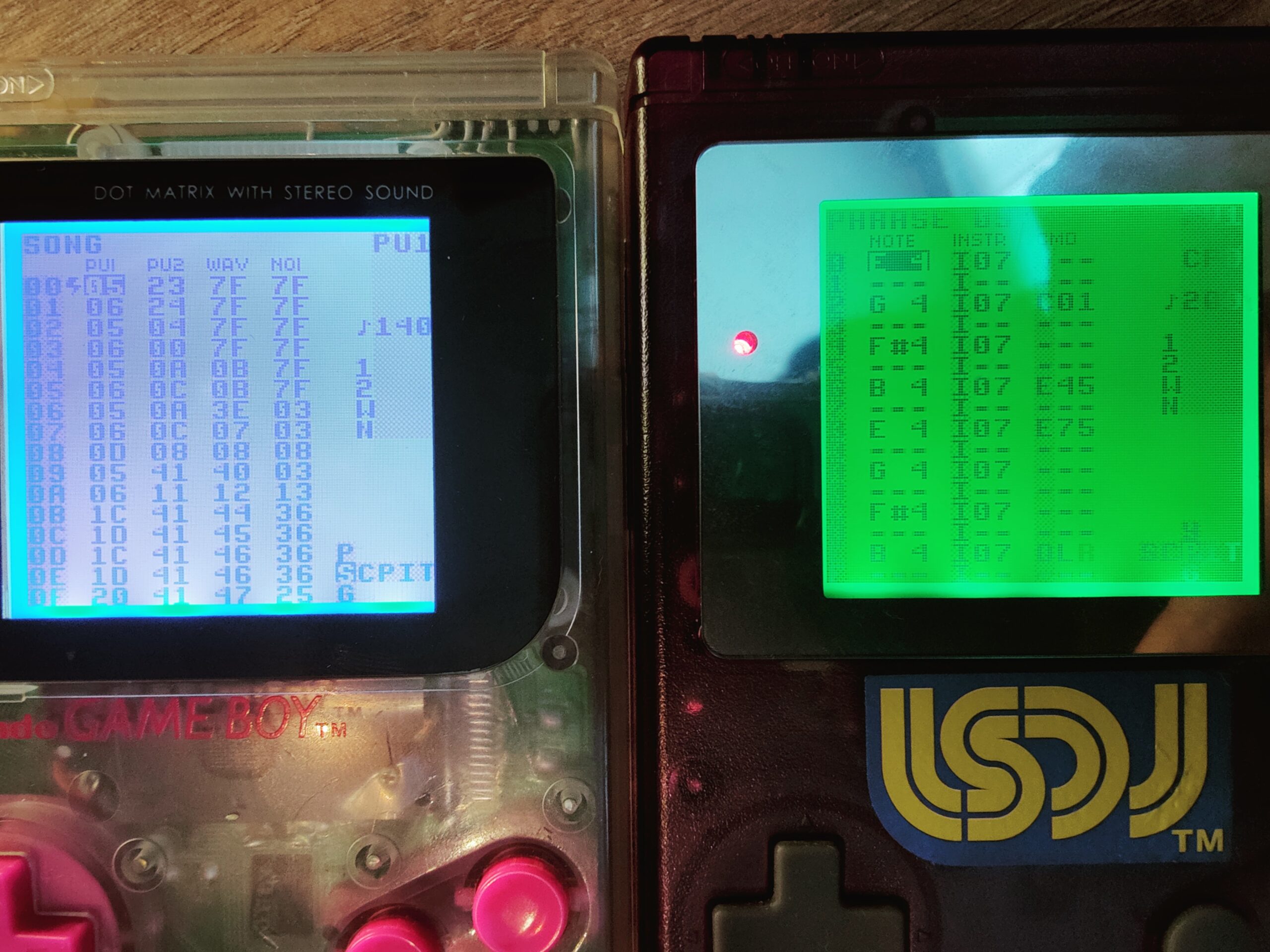
So as you can see both my Game Boys are modded. They are backlit so I can see my screen on stage. To make sure the audio is clean and loud enough for recording/playing live, they have a pro-sound mod as well (this also removes background noise). There are tons of mods to be found online, and I’d love to add some new ones to my Game Boys, but that’s something for the future.
The program I use to write music is called LSDj (Little Sound Dj). It’s a music sequencer (tracker) that can be run on an emulator, but my preference is to use it in combination with the actual hardware.
If you like numbers, you’re in for a treat. LSDj uses the Hexadecimal number system to represent all the values. Moving around the program feels like playing an actual game. There is a different button combination for everything and you can even draw your own waveforms to create different ‘instruments’.
Back in the day you had to buy a license online and flash the program onto a cartridge yourself. I own two cartridges with an integrated USB port, which makes updating LSDj and transferring music from my Game Boy to my PC a breeze.
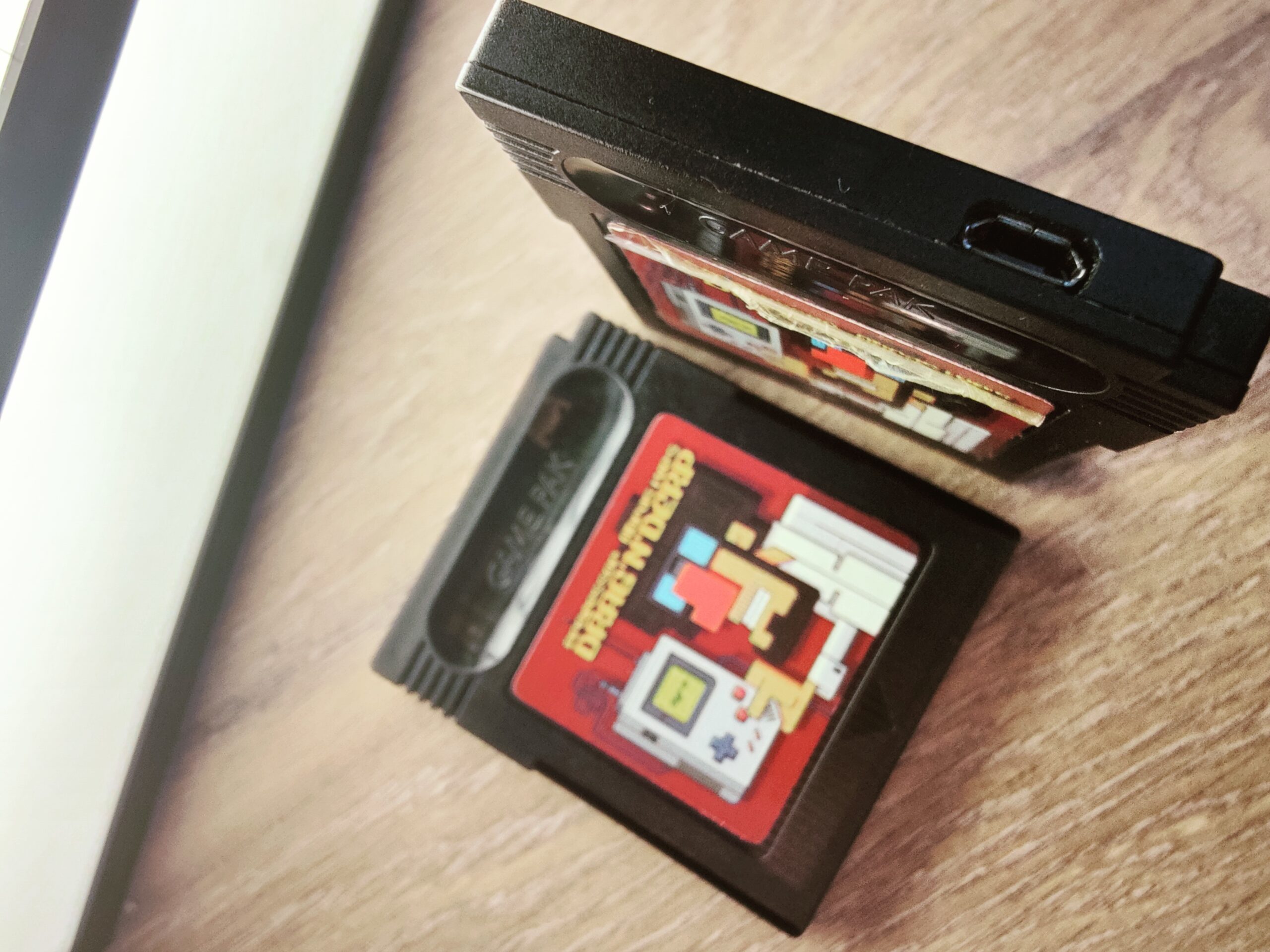
LSDj was made by one person, came out in 2000 and is still being updated. How cool is that?!
It is also possible to incorporate LSDj into an already existing set-up. Midi-sync is fairly easy to set up, so the possibilities are endless.
Eager to try out this fun program for yourself? You can buy a license on the official website, it’s only a dollar!
LSDj has a steep learning curve but once you get used to all the button combinations and find your sound, it is a big help in the creative process of writing fun melodies and coming up with chord progressions.
So, to answer the question I asked at the beginning of this article: YES, all Game Boys are instruments, but not all instruments are Game Boys.